
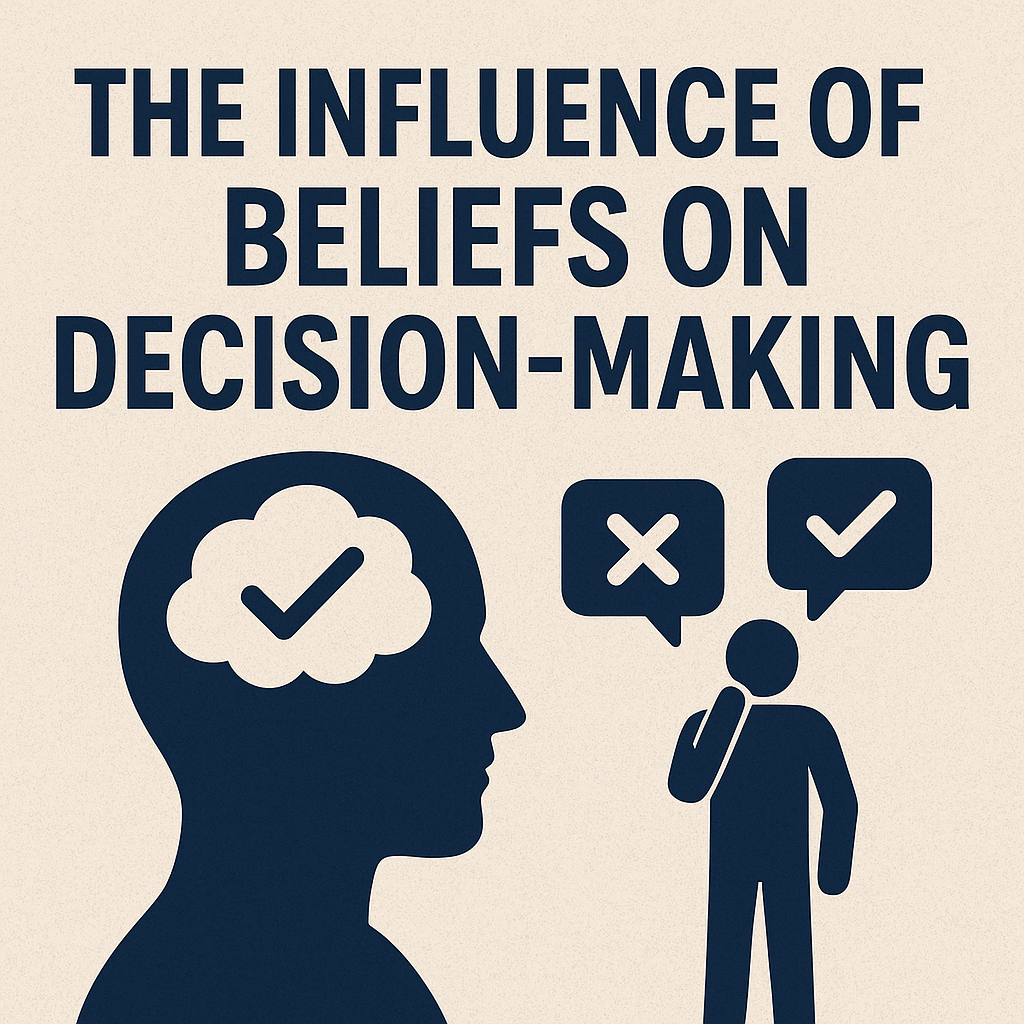
Every decision we make is shaped by an invisible framework: our beliefs. These beliefs act as mental filters, influencing how we interpret information, assess risks, and choose between alternatives—often without our conscious awareness.
Beliefs are formed through experience, culture, education, and repetition. Over time, they become shortcuts that help us navigate complexity. While this can be efficient, it can also be dangerous. When beliefs go unchallenged, they limit perspective and quietly dictate outcomes.
One of the most powerful ways beliefs influence decision-making is through confirmation bias. We naturally seek information that supports what we already believe and ignore signals that contradict it. This leads to decisions that feel right, but may not be correct.
Beliefs also shape our perception of risk and opportunity. A person who believes failure is unacceptable will avoid bold decisions, even when the potential upside is significant. Another who believes mistakes are part of growth may act decisively where others hesitate. The situation may be the same, but belief changes behavior.
In leadership and business, unchecked beliefs can become systemic weaknesses. Assumptions about markets, people, or capabilities often outlive the reality they were built on. This is why organizations that fail to question their beliefs eventually struggle to adapt.
High-quality decision-making requires belief awareness. This does not mean eliminating beliefs, but examining them. Asking simple but powerful questions—Why do I believe this? What evidence supports it? What if the opposite were true?—can dramatically improve judgment.
Ultimately, decisions improve not when we gain more information, but when we understand the beliefs through which we process it. Mastering decision-making begins with mastering the lens through which we see the world.

